
Understand your body’s responses. Make time for yourself.
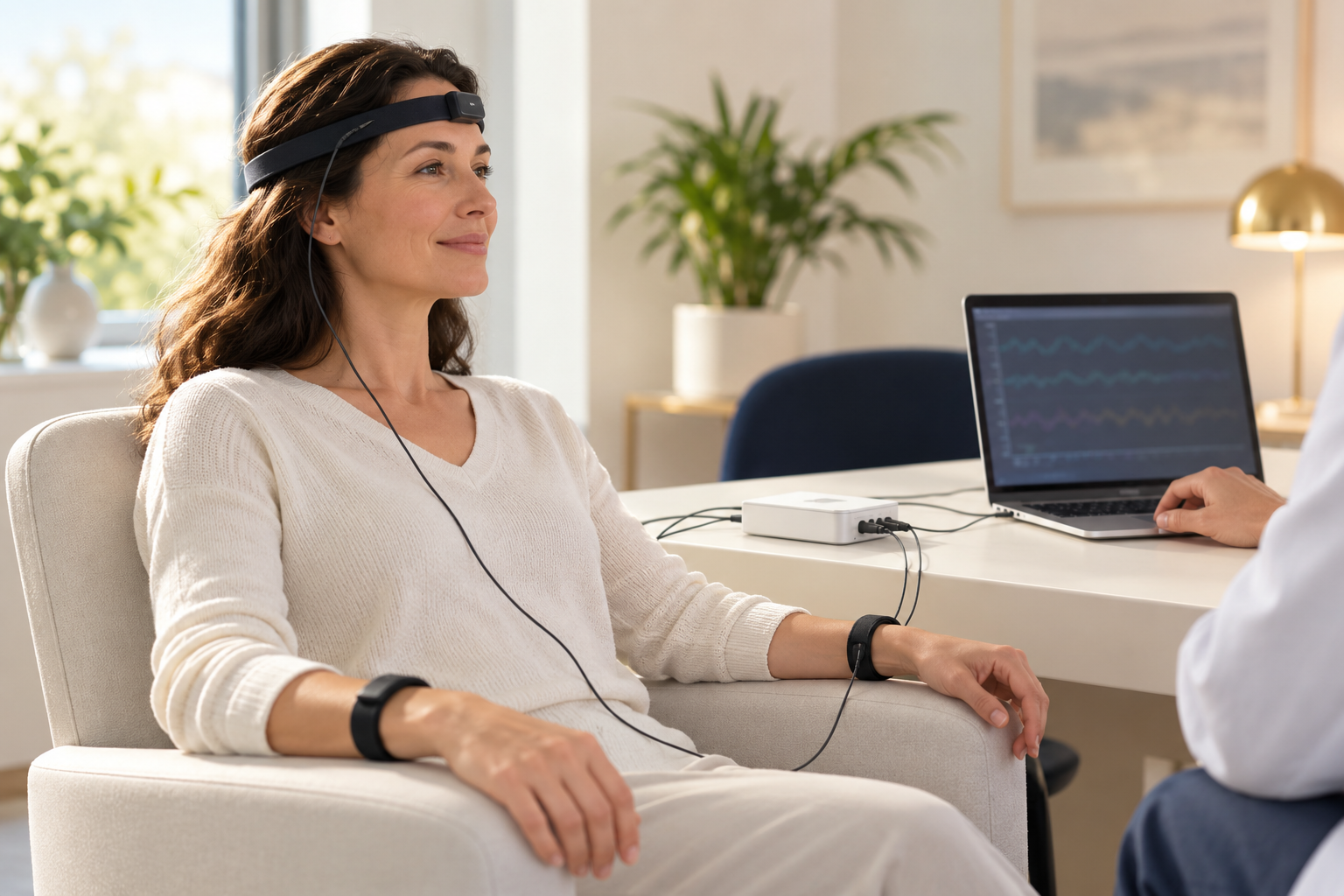
Biofeedback uses sensors and information displayed by a device to help you recognise bodily responses and practise self-regulation. Depending on the method and agreed goals, support may focus on relaxation and managing stress.
Guided support
A professional explains the process and answers your questions.
At your pace
Goals and further sessions are considered individually.
Active participation
Learning to recognise your responses is part of the process.
Preparing your care
Talk
Share what brings you here, your health history and your goals.
Understand
Learn about the equipment, the signals observed and what to expect.
Take part
The professional guides the session and responds to your comfort.
Review
Discuss your experience, your goals and the next steps together.
Your questions, clearly answered.
Explore the topics below. For a question about your own circumstances, contact us before booking.
Understanding Biofeedback
What information is observed?
Depending on the method, breathing, muscle activity or heart rate may be monitored. Electrodermal Biofeedback observes skin conductance, which is influenced by sweat gland activity. The team explains what the equipment being used measures.
Do the headband or sensors perform a blood test?
No. Sensors sit on the skin and collect specific signals. They do not directly measure vitamins or hormones and do not replace laboratory tests.
Is it a test to detect diseases?
Biofeedback is a method of support and training. Its readings alone cannot diagnose diseases, allergies, parasites or problems in an organ.
Is it the same as Bioresonance?
They are different approaches. Having sensors or a computer does not mean that methods measure the same things or have the same applications.
Can Biofeedback provide hormone replacement?
It does not provide hormone replacement or replace assessment of hormonal changes. Thyroid, menopause and other endocrine concerns should be discussed with a doctor.
Before and during your session
How should I prepare?
Bring relevant health information and a list of medicines. Wear comfortable clothing and check whether the equipment requires any specific preparation.
Do I need to fast or drink a lot of water?
Check the instructions for your session. Do not fast, drink excessive amounts of water or change medication on your own to have Biofeedback.
Will I feel pain, shocks or radiation?
Biofeedback with external sensors is generally non-invasive and does not use ionising radiation. Sensations depend on the device. Tell the professional about any discomfort.
Can I talk, move or close my eyes?
You can always ask questions or request a pause. During some measurements it may help to stay still and limit distractions. Follow guidance about posture and whether to keep your eyes open or closed.
How long are sessions and how often are they needed?
Duration and frequency depend on the proposed approach. The team confirms these details before booking and reviews the need for further sessions with you; there is no fixed number for everyone.
Suitability and precautions
What should I mention before booking?
Tell the team about a pacemaker or other implanted device, epilepsy, pregnancy or a relevant health condition. Suitability and contraindications depend on the equipment and method.
Is it suitable for children?
Age, ability to participate, goals and the method need to be assessed. Speak with the team and the healthcare professional caring for your child first.
Can I continue my usual treatments?
Yes. This support is complementary. Do not stop medicines or change prescribed treatment without discussing it with the responsible healthcare professional.
What if I feel worse after a session?
Tell the team what happened. Worsening symptoms should not automatically be interpreted as a sign of effectiveness or “detoxification”. New, severe or persistent symptoms need a health assessment.
Results and booking
What goals might it support?
Training may help you recognise tension and learn relaxation strategies. Its use for stress, sleep or other goals depends on the technique and individual assessment.
Is there scientific research on Biofeedback?
Yes, for specific methods and indications. Evidence for one method does not automatically establish the effectiveness of every product sold as Biofeedback or claims of correcting disease through frequencies.
Should I notice a difference immediately?
No response is guaranteed or the same for everyone. Progress should be reviewed against agreed goals. If there is no benefit, it is important to reconsider whether to continue.
Can I ask about equipment, price and availability?
Of course. Contact MouraMed to discuss the method, equipment and applicable documentation, price, duration and available times. You can ask your questions before deciding to book.
Still have a question?
Tell us what you are looking for. Our team can explain the care process and help you prepare your appointment.
Ask us on WhatsApp